
Eugenio Solis de Ovando Ph.D.
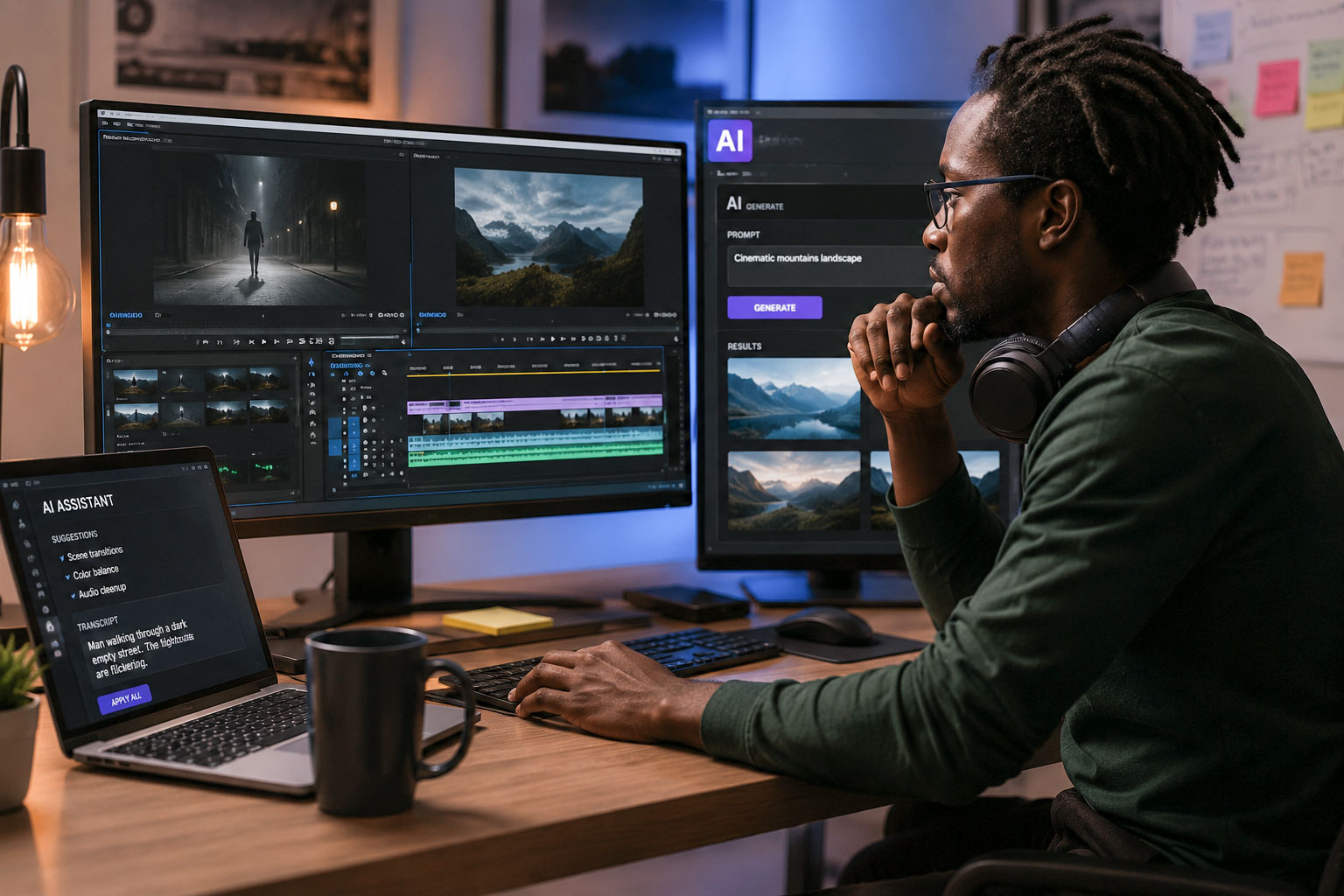
Artificial intelligence is already changing the creative professions. For this reason, the question of How Creative Professionals Can Stay Relevant in the Age of AI is becoming increasingly important for designers, photographers, marketers, content creators, and visual communicators. In design, photography, marketing, branding, and visual communication, companies are beginning to see AI not only as a new tool but also as a way to accelerate production, expand creative options, and rethink how creative work is organized.
However, the conversation needs more precision. It is common to hear that AI will simply reduce costs or replace creative professionals. The research suggests a more complex reality. In fact, the strongest evidence is not that AI automatically reduces costs, but that it can increase productivity, expand output, and change the skills required in creative work.
How Creative Professionals Can Stay Relevant in the Age of AI
Recent studies show that generative AI can improve creative productivity. Zhou and Lee (2024), for example, found that text-to-image AI increased human creative productivity by 25% and increased the perceived value of artwork by 50%. This supports what many professionals are already seeing in practice. AI can help generate more concepts, test more visual directions, and move faster through the early stages of creative production.
At the same time, faster does not always mean simpler. Research on AI in creative industries suggests that AI-assisted work may require new layers of professional judgment. As a result, creative professionals now need to know how to guide AI tools, evaluate their outputs, correct visual and conceptual problems, protect brand quality, and understand ethical and legal risks. In that sense, AI does not remove the need for expertise. Instead, it changes where expertise is needed.
AI Is Changing Creative Skills, Not Removing Them
This shift is especially important for designers, photographers, content creators, and communication professionals. A designer who understands AI can explore more variations and support more projects. Nevertheless, that designer still needs visual judgment, typography, composition, brand strategy, and critical decision-making.
Similarly, a photographer or visual creator can use AI for planning, mockups, editing, backgrounds, or campaign concepts. However, they still need an eye for image quality, visual coherence, and meaning. Therefore, the value of the creative professional is not only in producing an image or layout. It is also in knowing what works, what does not work, and why.
Copyright, Originality, and Commercial Use Still Matter
There are also real concerns around copyright, originality, authorship, training data, and commercial use. Some companies are cautious because many generative AI tools have been trained on large datasets collected from the internet. Consequently, organizations need to think carefully about legal risk, brand reputation, and responsible use.
Others, however, are moving quickly and adopting AI with fewer concerns. Tools such as Adobe Firefly have become relevant in this context because Adobe presents its commercial models as trained on licensed content, openly licensed content, and public domain content where copyright has expired. Therefore, for companies that want to use AI while reducing legal uncertainty, the choice of tool matters.
The Future of Creative Work
For creative professionals, the key issue is not whether AI will become part of the field. It already has. The more important question is how to remain relevant when AI becomes part of the production process.
In my view, the future belongs to creative professionals who can combine artistic judgment, technical skill, visual strategy, and AI fluency. The value of the creative professional is not disappearing. Instead, it is being redefined.
Continue the Conversation
This is the focus of our upcoming SOLOVANT webinar: How Creative Professionals Can Stay Relevant in the Age of AI.
Join us on June 11 for a practical conversation about how AI is changing creative work, what companies are looking for, and how designers, photographers, artists, content creators, and visual professionals can adapt without losing their creative identity.
References
Alkhateeb, S., Almomani, I. G., Altaweel, E. M., Aloqaily, A., & Salah, S. (2026). Artificial Intelligence and Graphic Design: Transformations, Challenges, and Future Job Trends. Journal of Cultural Analysis and Social Change.
Amankwah-Amoah, J., Abdalla, S., Mogaji, E., Elbanna, A., & Dwivedi, Y. K. (2024). The impending disruption of creative industries by generative AI: Opportunities, challenges, and research agenda. International Journal of Information Management.
Erickson, K. (2024). AI and work in the creative industries: Digital continuity or discontinuity?. Creative Industries Journal.
Iswanto, R. (2025). The Integration of Generative AI in the Creative Industry of Visual Communication Design: An Analysis of Its Impacts, Ethical Challenges and Work Originality. VCD.
Walkowiak, E., & Potts, J. (2024). Generative AI, Work and Risks in Cultural and Creative Industries. Social Science Research Network.
Zhou, E., & Lee, D. (2024). Generative artificial intelligence, human creativity, and art. PNAS Nexus.